
Budget air-carrier AirAsia has began its three day travel fair, offering 20 per cent discounts on flights across the airline's network.

The 2025 Sony World Photography Awards has announced its National and Regional Award winners, celebrating talent from 56 countries.

The diplomatic rift between India and Maldives, coupled with the suspension of flight bookings on one of India's major travel portals, has sent jitters down the spine of tour operators in the island nation. The Maldivian Association of Travel Agents and Tour Operators (MATATO), a forum for travel agents, has stressed that the Indian market is important to the success of tourism in Maldives.
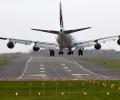
The government has decided to restart scheduled international flight services from March 27 after a two years hiatus due to COVID-19, according to civil aviation ministry officials.

This was achieved despite falling tourist arrivals post Babri Masjid demolition in December 1992.

Citing various aspects, the forum has appealed to the DGCA to "withdraw the harsh punishment and suspension of the PIC". it said.

Falling jet fuel prices and a revival in domestic traffic growth offer the new CMD a once in a lifetime opportunity.

Days after saying that there is no need for subsidies to achieve greater penetration of electric vehicles (EVs), Union Minister of Road Transport and Highways Nitin Gadkari on Monday clarified that the view is his own, but any official call on EV subsidies is not one that he can take.
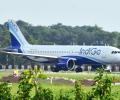
IndiGo's size should be compared with global carriers, and not other domestic airlines, chief executive officer Pieter Elbers said on Tuesday, adding that such benchmarking will help India transform its airports into aviation hubs. Elbers flagged the tendency to scrutinise domestic competition, assess fares on domestic routes, and determine if they are high. "But if we want to build some hubs, we should have a broader look," he said during a panel discussion at a convention organised by All India Management Association (AIMA).
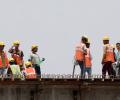
Several firms are stepping up to help their workforce cope with soaring temperatures

Reyat was convicted of perjury in 2010 for lying to the court in 2003 during the trial of Ripudaman Singh Malik and Ajaib Singh Bagri, who were acquitted in the terrorist attack on Air India Flight 182 that killed all 329 people aboard.
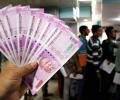
Monsoon delay? Claiming compensation from an airline isn't easy.

Prime Minister Narendra Modi announced the launch of the new flight at the SAP center cheering up thousands of Indians.

In March this year, domestic air traffic had spiked by 1.6 per cent to 5.18 million passengers, compared to 5.1 million in March 2012.

International and Indian airlines are refusing to refund cash and giving credit that can be used later.
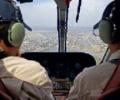
A new rule has been drafted by aviation regulator Directorate General of Civil Aviation formally empowering the pilot-in-command of all flights to take suitable action to prevent such commotion which could endanger safety of the flight or passengers or crew members.
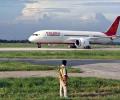
Civil aviation ministry to monitor flash sales and discount schemes: Source

As fliers find themselves spoilt for choice, airlines are looking at ways in which to position themselves distinctively.
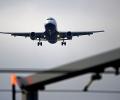
The airline industry is projected to register a net profit of $25.7 billion in 2024 as more normal growth is expected in both passenger and cargo segments, global grouping IATA said on Wednesday. For 2023, the net profit is estimated at $23.3 billion, significantly higher than the $9.8 billion projected by the International Air Transport Association (IATA) in June this year. IATA has more than 300 airlines as members.
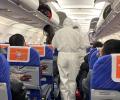
There were nearly 4,000 cabin crew with Jet when the airline was grounded; every fifth remains without a job to date. One cabin crew member with 10 years of experience has been forced to take up a teaching job; some have branched out into small businesses. Aviation jobs were scarce even before the Covid-19 pandemic arrived on Indian shores in early 2020. The situation has been exacerbated since.
'When the bombing happened in the Taj Mahal hotel in 2008, that was a very sad moment, but he really took care of the people, took care of everybody and that was when you saw some of his best moments.' 'There are some things which we will never forget. That is when the best of a person comes out.'

On the international air traffic front, Asia-Pacific airlines recorded an increase in demand of 5.5 per cent compared to November 2012.

'The unity among Israelis is such that the killing of the many Israelis is like a personal loss.' 'They feel as if they have lost someone from their own family. The whole of Israel is sad.'

The current slowdown has lasted for over 18 months and is the longest incident of sluggishness since 2006.

India's Rs 4.5-trillion fast-moving consumer goods (FMCG) sector was one of the first to bounce back from the lockdown induced blues, reporting a year-on-year (YoY) growth in the October-December quarter last year. That said, the overall consumption figures continue to remain depressed. The FMCG market, which includes daily consumables like branded atta, hand sanitizers, edible oils, shampoos, razors, and so on, recorded 7.3 per cent value growth during the period, while the smartphone market grew by 21 per cent.

The company has dismissed 194 cabin crew and 11 pilots over past year for unauthorised absence and such reasons.

West Asian carriers are up against Air India and IndiGo in the battle for seats on lucrative international routes.

Pricing to be outside federation's purview.
In a dramatic turn of events in May 2019, an Emirates aircraft en-route to Dubai was asked to stop while it was taxiing for a take off in Mumbai. The pilot was given no reason and ordered to immediately return to the parking bay. As the aircraft returned to the terminal, two passengers from the first class - Naresh Goyal and his wife Anita - were offloaded by the immigration authorities, who said the duo cannot leave the country. Goyal, founder of Jet Airways, was stunned. The man, who ruled the aviation sector for two and a half decades with an iron hand, did not expect to be offloaded in this fashion.

Kolkata trams -- now in their 150th year -- are the last to survive modernity in Indian cities, writes Ishita Ayan Dutt.

The Adani group will invest Rs 10,700 crore into Lucknow airport's expansion so that its annual passenger handling capacity zooms from 4 million passengers per annum (MPPA) to 39 MPPA. The airport's expansion plan received clearance from the Union environment ministry on December 15. However, the plan submitted to the ministry did not mention the deadline for the expansion.
The recent spate of technical glitches in aircraft has prompted the Directorate General of Civil Aviation (DGCA) to issue an order on July 18, making aircraft maintenance engineers (AMEs) with category B1/B2 licences the final authorities in certifying planes. This has put the spotlight on the availability of such personnel. According to the order, airlines were resorting to frequent one-off authorisation by the Category A certifying staff at transit stations, which is not in line with existing regulatory provisions.

Samridhi Bhardwaj analyses the dynamics of duty-free liquor allowance in India.

Carriers' input costs are rising due to weak rupee and rising crude oil price.

AirAsia says deal not violative of shareholder agreement.
Prices of tickets booked three days prior have soared 70% over last summer's fares
Ahead of two crucial audits, the Ministry of Civil Aviation (MoCA) has proposed to allow deputy director generals (DGs) and officers of Indian Air Force (IAF) to apply for the post of chief of India's aviation regulator. The current head of the Directorate General of Civil Aviation (DGCA), Arun Kumar, has been promoted as secretary and is expected to move out some time soon. DGCA has four Deputy DGs with experience in different fields of aviation.

Aviation is a juicy target. It's a 24x7 industry, which cannot afford delays or loss of customer credibility.
Life of air passengers was different in the 1970s.

Fuelled by rising passenger traffic and reviving local economies, the global airline industry is projected to record a net profit of $9.8 billion this year, IATA Director General Willie Walsh said on Monday and also made a strong pitch for having global standards for a Sustainable Aviation Fuel (SAF) book and claim system to help reduce carbon emissions. While addressing the Annual General Meeting of the International Air Transport Association (IATA) here, Walsh also flagged concerns about supply chain issues that are raising costs as well as limiting the ability of airlines to deploy aircraft. He also pointed out that decarbonising aviation is a serious issue and governments must not be allowed to use it to shore up exchequer finances.
